A very interesting fact has been presented by Masaru Hojo from Kobe University, Japan regarding the relationship between caterpillars of the Japanese oakblue butterfly (Narathura japonica) and ants (Pristomyrmex punctatus ). Earlier the relationship between the two was supposed to be a balanced one that is beneficial for both but according to Hojo, it is actually beneficial for the caterpillar.
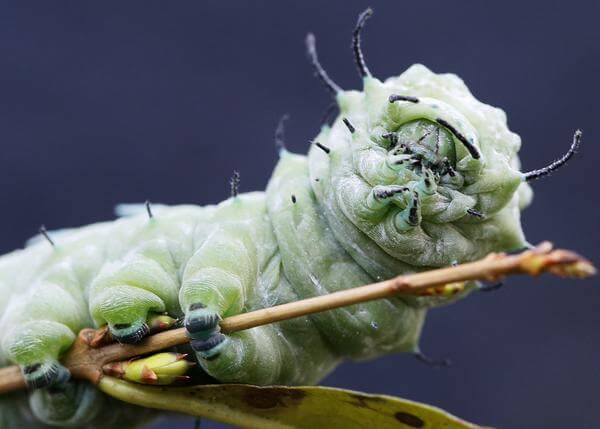
These caterpillars actually secrete sugar droplets to attract ants which then act as their bodyguards against spiders and wasps. But Hojo noticed that it was always the same ants that took care of the caterpillar. To confirm this, he conducted an experiment where he and his colleagues allowed some ants to interact with the caterpillars and feed on the secretions and kept others separate. Ants that ate the secretion remained close to the caterpillar and didn’t return to their nest. Also whenever the caterpillar flipped its tentacle, they grew aggressive taking it as a sign to attack predatory spiders and wasps. According to Hojo, “There are glandular cells near the tentacles that could be secreting chemical signals. It is possible that both visual and chemical signals are stimulating the ant aggression.” On the other hand, the ants that were in lab and had not eaten the caterpillar secretion did not react when the tentacles flipped. So it was concluded that caterpillars can directly dictate the behaviour of ants and it is all because of their sugary secretions that makes the ants doped up.
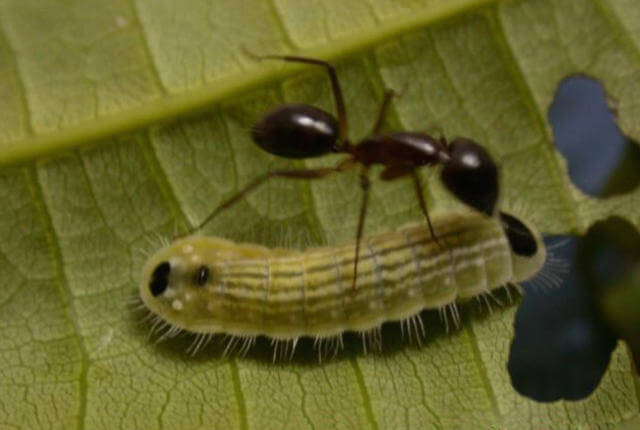
The team also found that the ants that ate the secretion had lower levels of dopamine, a compound shown to affect movement and aggression in insects, than ants that had not eaten the secretions. To derive a further correlation between the secretion and behaviour of ants, the team treated the ants with a drug called reserpine that blocks the transport of dopamine. Ants that previously reacted to the tentacle flipping by becoming more aggressive, stopped doing so, suggesting that dopamine does play a role in this relationship. The chemical composition of the caterpillar secretion is yet to be identified. These findings also hint that the ant-caterpillar mutualism, which is similar to relationships found between many other species, could actually be a manipulative parasitic behaviour.
[adinserter block=”7″]
Author: Technology Blog