A scissoring origami-inspired bridge: Saviour in disasters!

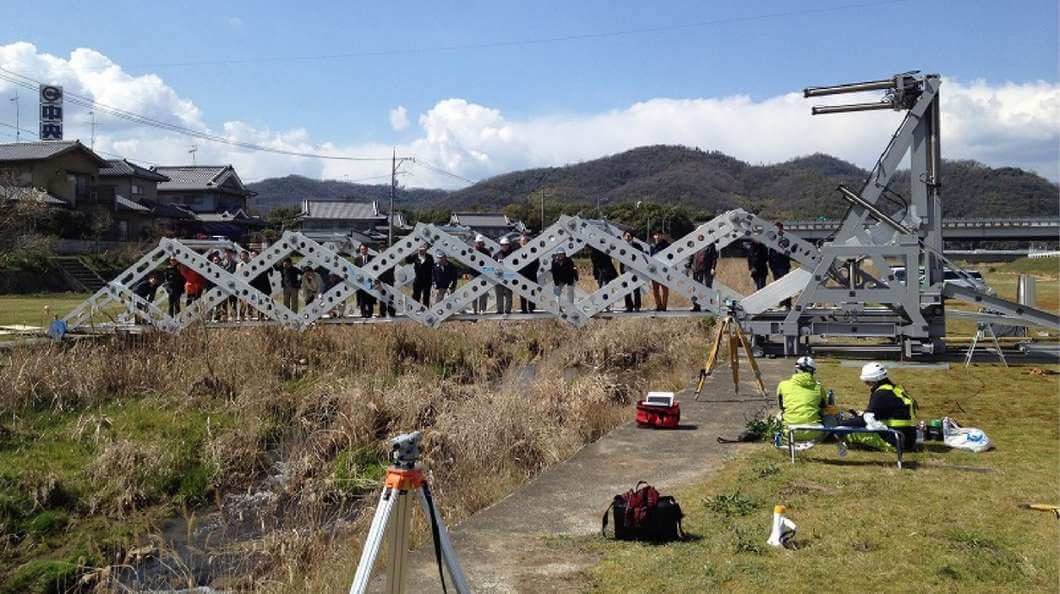
Dr. Ichiro Ario along with his team of researchers has developed a bridge that may become a saviour in various natural calamities like floods, earthquakes or landslides. The bridge named as the Mobile Bridge Version 4.0, developed at Hiroshima University, is claimed to be the world’s fastest, largest, strongest and lightest expanding temporary bridge. This bridge is said to be inspired by the Japanese folded-paper art of origami.
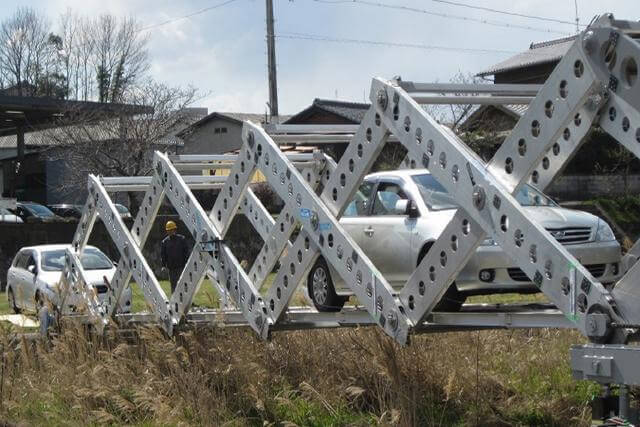
640_BridgeGenerally any kind of natural calamity cuts off the survivors because of the damage it causes to the bridges. In such a scenario the Mobile Bridge Version 4.0 can be towed on a trailer to the required spot (as it contracts like an accordion and can be accommodated on a trailer) and can be folded out using its scissor-like action that aids in sliding out its decking sections end to end providing a platform for vehicles.
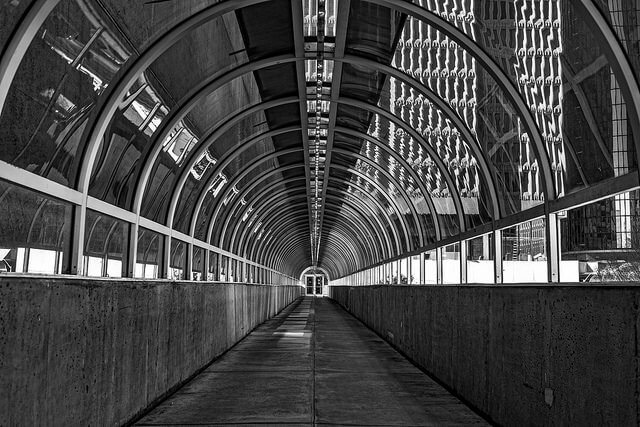
f9cbb_1323428001088517992

In an hour’s time, it arrives and can be used with no foundation construction or cranes being required. The best part is in only five minutes… yes five minutes, it can expand across the river and receive traffic as soon as it is fully expanded. Ario and his team are continuing their work on this technology in order to find a solution to the problem of extending the lifespan of older bridges needing structural support.

[adinserter block=”7″]

Author: Technology Blog
Now, Single Antibody Vaccine for Many Flu Types

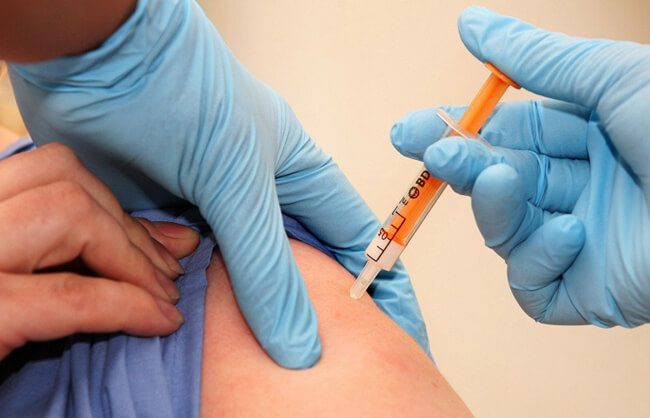
The usual interaction of antibody and virus interaction is that, the antibody recognizes virus by previous contact, and quickly binds to it before the virus can infect any host cells. The virus is killed, and we are saved. But viruses are tricky to cure, as they use the host’s mechanism to survive. In order to do that, they evolve and mutate with our system. Thus, we are recommended to take flu shots every year.

15e0ede5-69a9-4915-b764-bea9806e1547

But what if we were never infected by this virus before, for our system to have a footprint? This is where vaccines come in. Vaccines are weakened, or deadened strains of the virus, which our antibodies could easily empower. Once, killed, the antibody now can recall this, when the actual strong virus enters our body.

Usually, an antibody acts on only one virus. But the antibody CT149 works on more than one virus. It does all the same function as a other antibodies, expect that it binds to the hemagglutinin region of the cell membrane.

Cell Research – Centrifuge Tubes

This antibody allowed mice to remain protected from four powerful different flu virus strains, including H1N1, which causes swine flu. This flexibility of the antibody’s area of action, would allow for lesser and more generalized vaccines.

[adinserter block=”7″]

Author: Technology Blog

Live Inside a Windwheel Now! Yes, very soon..

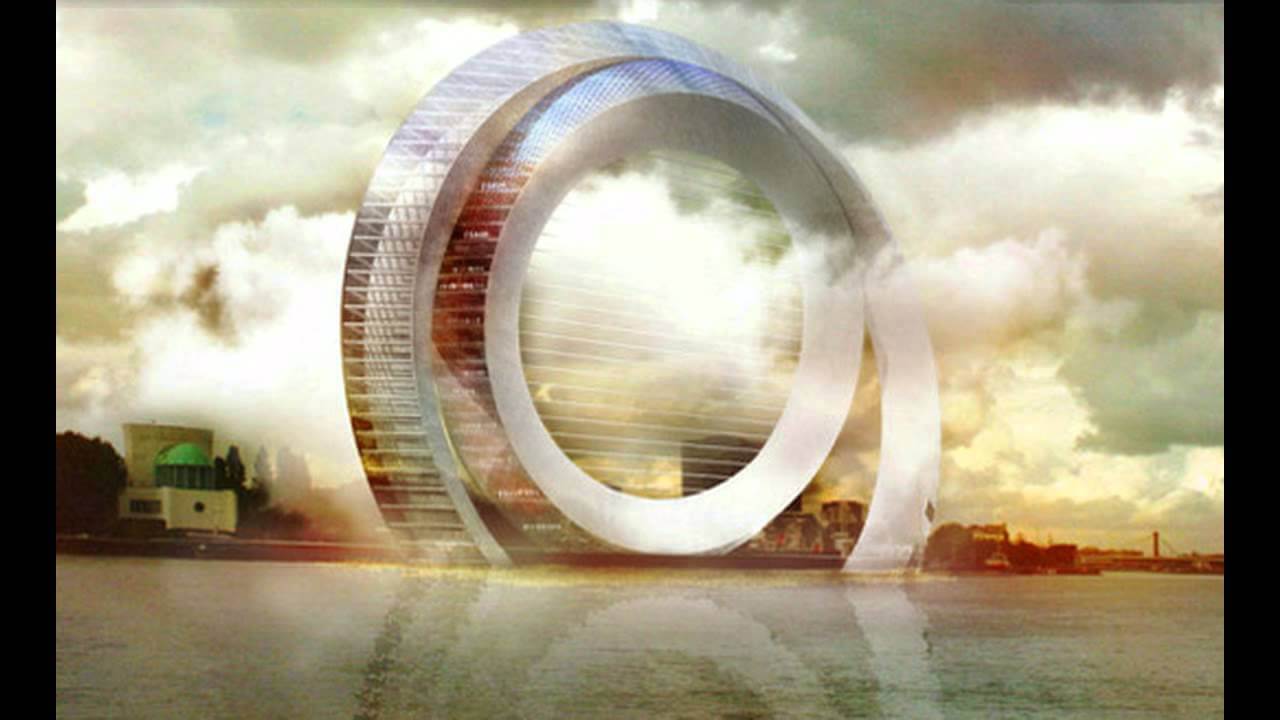
The Dutch countryside might be known for their charming windmills, but the cities are too cramped, and impatient to install theses whoshing turbines. The Dutch Windwheel could be a more acceptable solution for the cities.

dutch_windwheel_system

Traditionally, a windmill convert kinetic energy of the blowing wind, into mechanical energy to generate power. This model is 45% efficient. The Dutch Windwheel, on the other hand, converts the kinetic energy directly into a current, by making using of water, air and an electric field.

As of date, the Dutch Windmill is just 3% effective, and not feasible to use. But, technological advancements and a huge 570 ft. structure, could open doors for a new opportunity in energy production.

The 570 ft. structure could generate 12 megawatts of current in place of the 12.5 milliwatts it is currently able to produce. 12 megawatts would be enough for people to live and work inside this unique building.

“We wanted a 100-percent-sustainable building that serves as a platform for all kinds of innovations,” developer Lennart Graaff says.

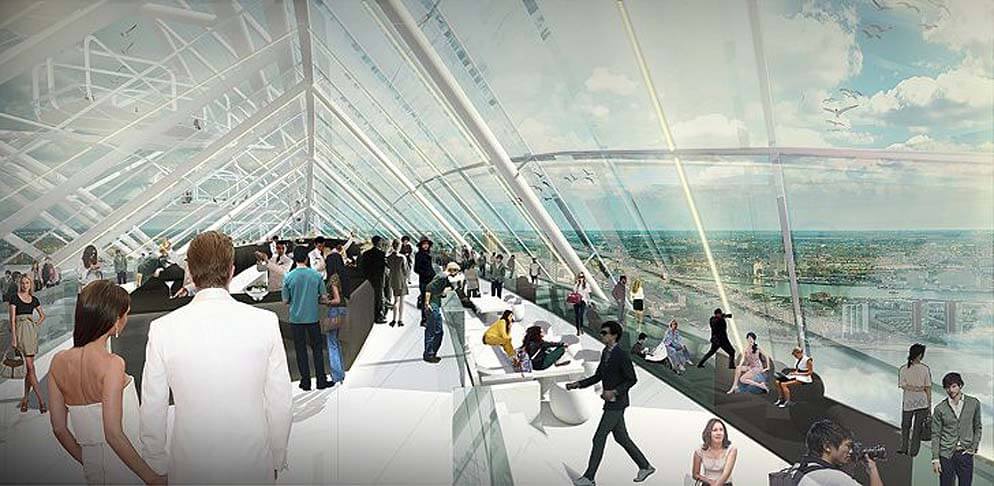
The design of this windwheel is to be in the shape of a hollow ring, where, the inner ring will possess a panoramic view, including space for a restaurant, a seven-story hotel, 72 apartments, and office space located within.

maxresdefault

The outer ring has 40 glass cabins, and can be compared to the London Eye, as it will take passengers from over it, to the canals below in a wheel-like fashion. The canals would be used to take up water, for generation of current by the windwheel. Horizontal beams will be present across the body, and nozzles will spray out water droplets. When the wind pushes the water droplets against the beams, a negative potential charge is created. Water droplets are have positive charges to start with, and a current is generated, after which DC to AC conversion takes places for utilisation or storage. Solar panels are located on the outer surface of the rings, and will keep the building heated.

[adinserter block=”7″]

Author: Technology Blog
Verified by ExactMetrics