Sonovation’s new technology may cause a revamp of iPhone

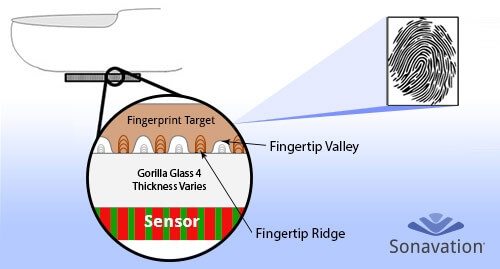
Some iPhone users have been asking for years to remove the Home button and a new glass technology developed by the company Sonovation might push Apple to make some radical changes to the iPhone’s iconic Home button. According to an announcement from Sonovation, using the new glass technology, they can insert ultrasonic biometric sensors under Gorilla Glass Display and the device would still have the ability to read the user’s fingerprints.

fingerprint

In the case of Apple’s iPhone, iPad and iPod touch, the fingerprint sensor is embedded in the Home button, so removing this button implies relocating the Touch ID button or incorporating it in the iPhone’s screen. In this scenario, this new technology of Sonovation may come in handy as it can even scan fingerprints on a wet, dirty or oily finger. There is still no confirm news as to which devices would be the first to incorporate Sonovation’s new feature, but there is a probability that future iPhones may have it.
sensor_sonavation

Apple has planned its first major redesign for iPhone 7, which is slated for a 2016 launch.

[adinserter block=”7″]

Author: Technology Blog
Noise barriers on highway: A new way of generating energy?

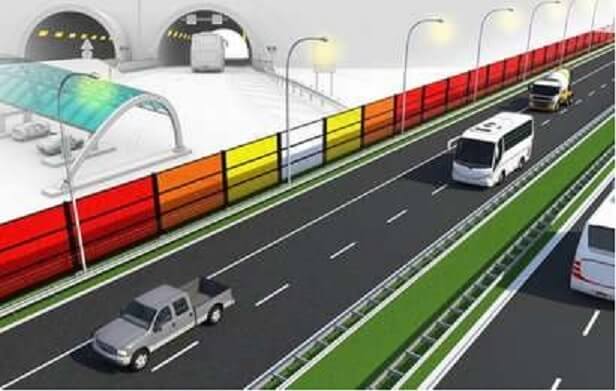
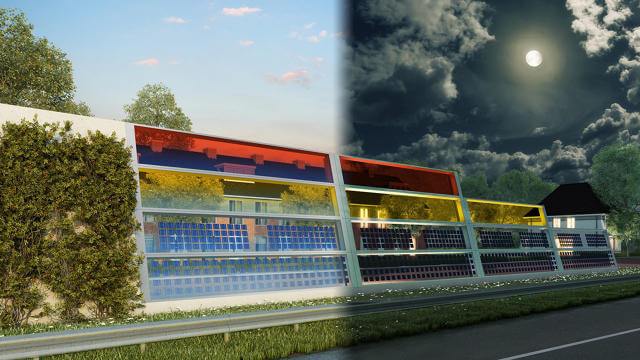
Michael Debije at the Eindhoven University of Technology has developed a solar technology utilising which, highway noise barriers can contribute in energy generation if the tests underway in Newzealnd prove to be a success. In this concept the colourful roadside noise barriers incorporate luminescent solar concentrators (LSCs) which, in order to generate energy, transfer light to the solar panels fitted at the side.

3048222-inline-i-1-these-beautiful-translucent-barriers-copy

Debije recounts the advantages of LSCs as: “the principle used is low cost, they can be produced in any desired, regular colour; is robust and the LSCs will even work when the sky is cloudy. That means it offers tremendous potential.”

lscpanels-jpg

In a span of one year, these barriers will be tested on various parameters like effectiveness in power generation, vandal resistance and maintenance requirements. The dimensions of these semi-transparent acoustic screens are 5m (width) and 4.5m (height) and it is hoped that a 1 km strip of such barriers can generate enough energy to power 50 homes.

[adinserter block=”7″]

Author: Technology Blog
Cheaper Space Travel using Microwave Energy

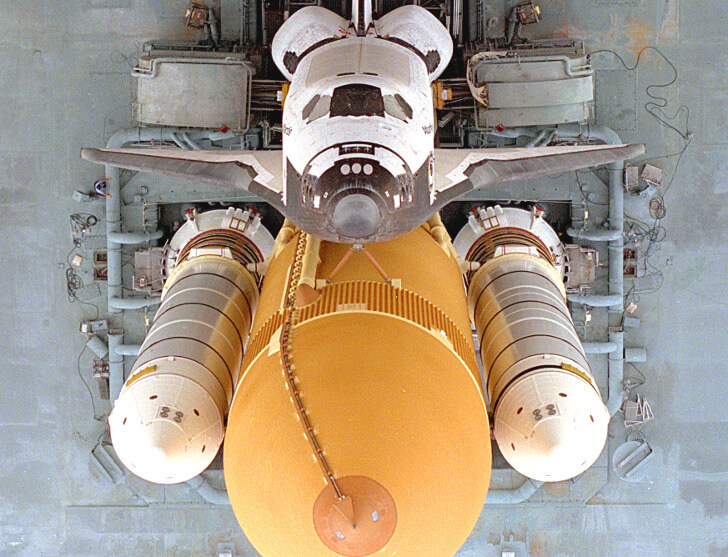
This idea rethinks the entire system of the space-plane. The energy for the launch is received via ground-based microwave emitters which provide power into a collector located in the plane’s heat shield. This acquired energy would drive an electromagnetic motor that triggers the reaction in a small quantity of pre-stored fuel, and the thrust needed to overcome the escape velocity is generated. This system eliminates the need for use of enormous amount of fuel merely for launch, and makes space travel more economical.

emdrive-head-640x353

Escape Dynamics, claims that a hydrogen-based rocket, would have Specific Impulse (the equivalent of MP/H for a rocket) of 600 seconds, which is much more than the produced 500 seconds in a Helium-based rocket. This results have only been seen in ideal settings i.e., laboratories, and the conditions outside are yet to be tested.

2AB50E6200000578-0-image-a-21_1437424077295

Hydrogen would be the most efficient fuel to use, and the creation of reusable rockets would save us a whole lot of funds. For the above idea to work, a globally interconnected network of microwave emitters would have to be created, for the entire duration of the flight, not to mention, various environmental and political restraints that are bound to emerge.

[adinserter block=”7″]

Author: Technology Blog

Stem Cells to Cure Chronic Respiratory Illnesses

This research has been initiated by a team at the Weizmann Institute of Science and works uses the similarity of stem cell found in lungs, and that found in the bone marrow.

Stem cells in the bone marrow are grouped together in many specialised regions. Which such region, has to be cleaned, before transplanting new stem cells there. The stem cells, contain the innate ability to find their way to the right compartments.

stk109166cor

To test out whether this was again a point of similarity between bone marrow and lung stem cell, the team introduced the developing embryonic stem cells of 22-22 weeks in to the damaged lungs of another rodent.

As expected, the stem cells found their way into the right place from the bloodstream, proving the hypothesis.

copd

The right amount of immuno-suppressant to be administered is being monitored everyday so that the body doesn’t reject the transplanted stem cells. A bank of lung tissue to be used as resource for stem cell is being envisioned, in the future.

[adinserter block=”7″]

Author: Technology Blog
Verified by ExactMetrics