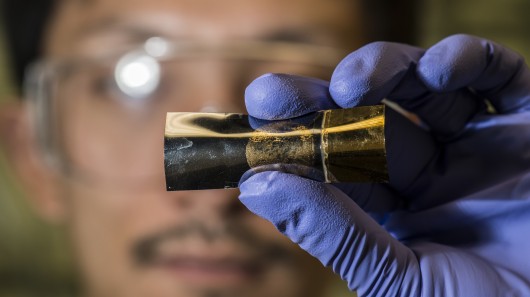
Smartwatches and fitness trackers are the need of the day. But the problem with these gadgets is their size constraint. Because of their small size, the very small cells fitted inside; struggle to deliver the quick bursts of power needed to broadcast data wirelessly. This problem gets even worse over long distances. To find a solution to this problem, researchers at MIT have developed a new type of flexible, nanowire-based supercapacitor. These small supercapactiors could, in future deliver quick bursts of high power needed for these gadgets.
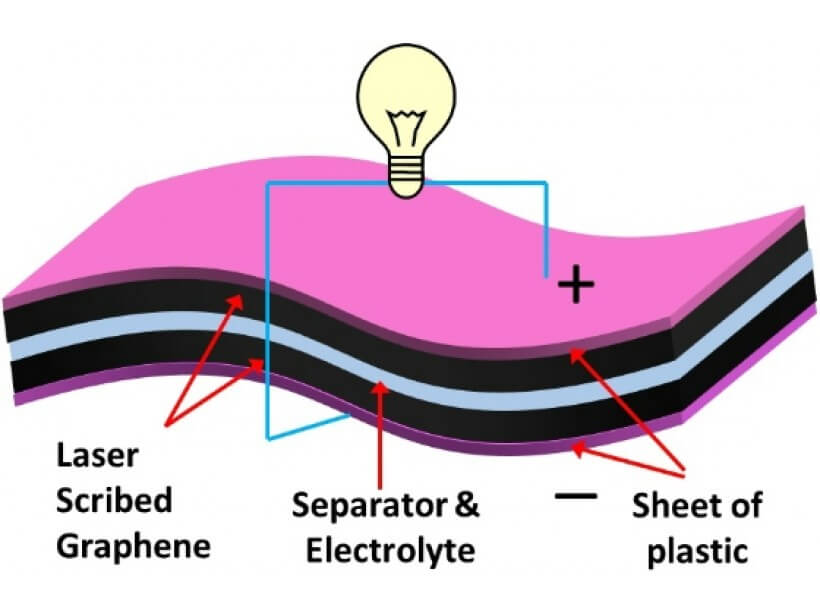
Presently, researchers are in the process of developing high-performance supercapacitors from a number of materials, carbon nanotubes and grapheme being the front runners because of their capacity to pack large number of ions on their large surface area which in turn helps in storing more energy inside a small device.

The MIT has proposed a new approach that uses yarns made from niobium wires as the electrodes in the tiny supercapacitors. This nanowire- based supercapacitor has high volumetric power density of 55 W/cc and energy density of 7 mWh/cc; which are respectively two and five times of nanotube-based yarns. It would be a possible to produce the device at a lower cost and in a form that occupies even smaller volume. In addition to this, Niobium is a fairly abundant material so the supercapacitors would be easy to produce and cheap. These may also be used for powering robots. Because of its high flexibility, the material can also be woven into fabrics and wearable devices with a lower carbon footprint can be created.
[adinserter block=”7″]
Author: Technology Blog