The Map of Tastes on Tongue: Wrong! All wrong!

2015-07-13 20_51_03-P1020054copy.jpg Photo by kYoOti3_baB3 _ Photobucket

That famous tongue map diagram marking off different areas of tastes on the tongue viz. Sweet in the front , bitter at the back and salty and sour on the sides, originated in a 1901 paper Zur Psychophysik des Geschmackssinnes by German scientist David P Hänig. Hänig dripped stimuli corresponding to salty, sweet, sour and bitter tastes round the edges of the tongue and found that there was a variation in the amount of stimulus that made the tongue register its taste. He plotted a graph for this. This graph led a Harvard professor Edwin G. Boring to finally come out with a tongue map that had various sections devoted to different tastes. This is the map that is taught in schools since ages.

Arguments against the taste map

parts-of-tongue1-801x1024

Ever since the tongue map came into existence there have been arguments opposing it. Results from a number of experiments indicated that all the areas of mouth containing taste buds (even the soft palate on the roof of one’s mouth) are sensitive to all kinds of tastes. The chorda tympani branch of the facial nerve in the front and the glossopharyngeal nerve in the back are the two nerves that are supposed to be responsible for taste perception in tongue area. But studies found that even an absence of chorda tympani didn’t affect the tongue’s ability to taste sweet!

The modern molecular biologists have also identified many receptor proteins that are critical for detecting taste molecules and found that each receptor type is found all taste areas in the mouth and not in certain demarcated sections. If you still want to test it, do it at your home by tasting coffee or a salty wafer. U will know that the taste is spread all over your mouth.

[adinserter block=”7″]

Author: Technology Blog

Want to know how dolphins use sound to see?

human-senses-vs-shark-fish-and-dolphin-senses-12-728

Using a technique called diffusion tension imaging (DTI), neuroscientists have succeeded in mapping the sensory and motor systems of two dolphin brains, for the very first time. This would help the researchers to understand how animals actually use the skill of echolocation. Echolocation is the skill that animals use to navigate and spot prey by emitting high frequency sounds. Most mammals process sound in the temporal lobe whereas a dolphin’s auditory nerve is wired to both the brain’s primary visual region and the temporal lobe, which is exactly the reason for a Dolphin’s world-famous sonar. Neuroscientists at Emory University have presented these facts and more in a forthcoming paper in Proceedings of the Royal Society B.

Dolphin_UltrasoundBeam_HRbig

Lori Marino, cetacean neuroscientist and study co-author said: “This research shows that the dolphin brain is even more complex than we realised. They can rapidly move back and forth between their senses of sight and sound and are the most sophisticated users of biological sonar in the animal kingdom.” Using DTI (that maps the brain’s wiring structure) , the researchers were able to establish that two totally different regions associated with vision and hearing respectively were clearly connected by the auditory nerve in a dolphin’s case.

Based on these mappings of dolphin brain, Gregory Berns, lead study author, believes that as a next step, DTI technique can also be used to scan the brains of all the animals housed in museums and this may help in digging out some answers to the mystery of how animals think.

[adinserter block=”7″]

Author: Technology Blog

Re-configurable and Reusable Quantum Satellites

698135main_Servicing-Satellite-Full

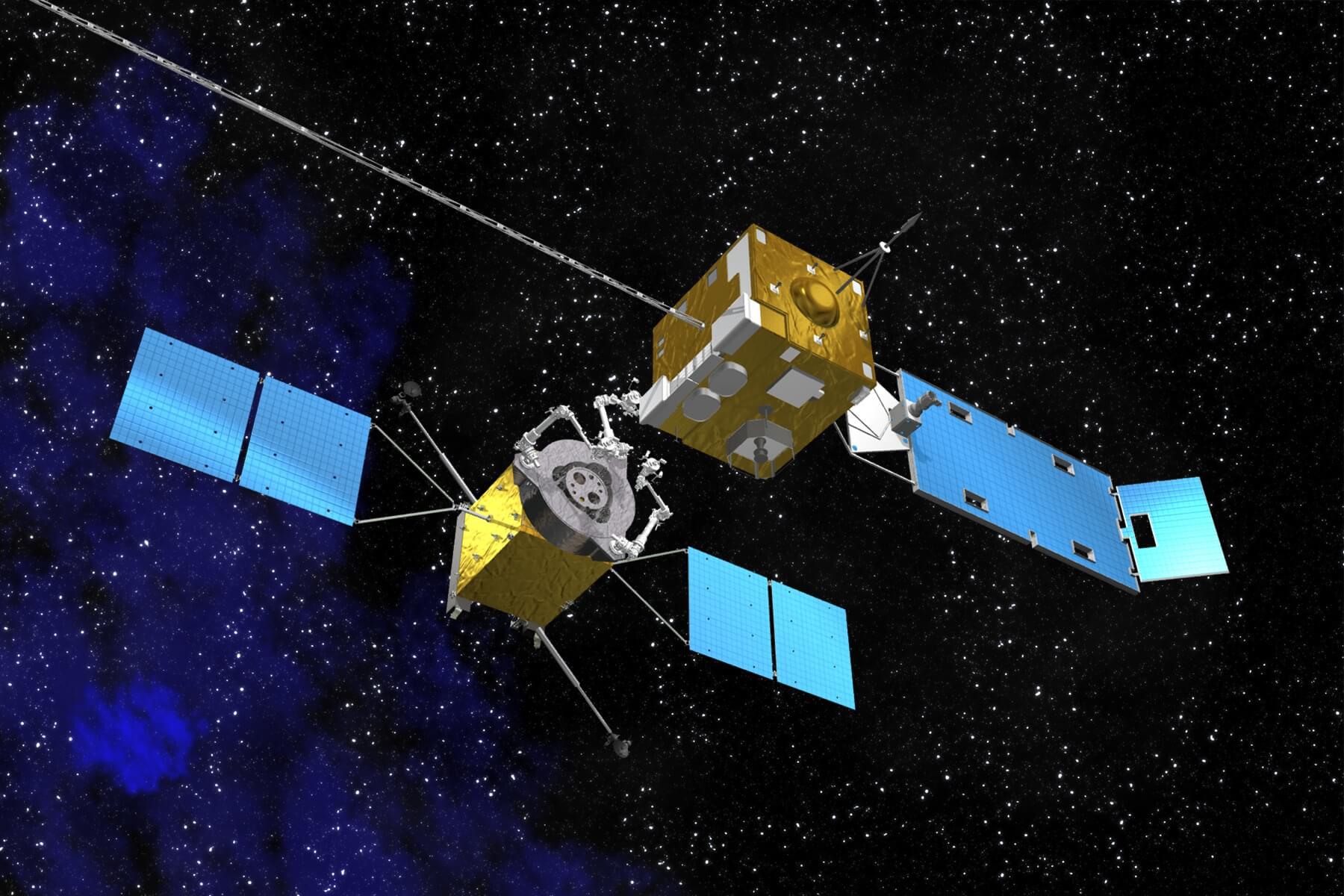
Science has made yet another stride in the creation of Quantum satellites which can be reconfigured for a different project from earth anytime during the 15 years of it’s orbital life.

ESA, Eutelsat and Airbus Defense and Space are behind this new technology.

p0uyU2QHqN6aqNd2sZuQ_full satellite on trolly.jpg

Satellites are traditionally made up of expensive and sturdy material to protect them in space. After the assigned project of the satellite is complete, the structure is discarded. This, not only requires more funds to construct a new satellite for a new job, but also, contributes to the enormous amount of man made junk floating about in outer space.

Quantum satellite uses phased array antennas which can be reset electronically. The first Quantum satellite is to be delivered in 2018.

[adinserter block=”7″]

Author: Technology Blog
Verified by ExactMetrics