Philips’ LED-based indoor farming to revolutionize the food industry!

philips_02-1000x666

Ever wonder what will happen when the ever increasing population of the world will eat up all the land that is used for agriculture? And when there is no land to grow food on, what will happen to those ever growling hungry bellies? Addressing this same societal concern of world hunger and aiming to provide healthier and better tasting food to all, Philips has recently opened an LED-powered farm called GrowWise City, in the Netherlands which is now home to 10,000 researchers.

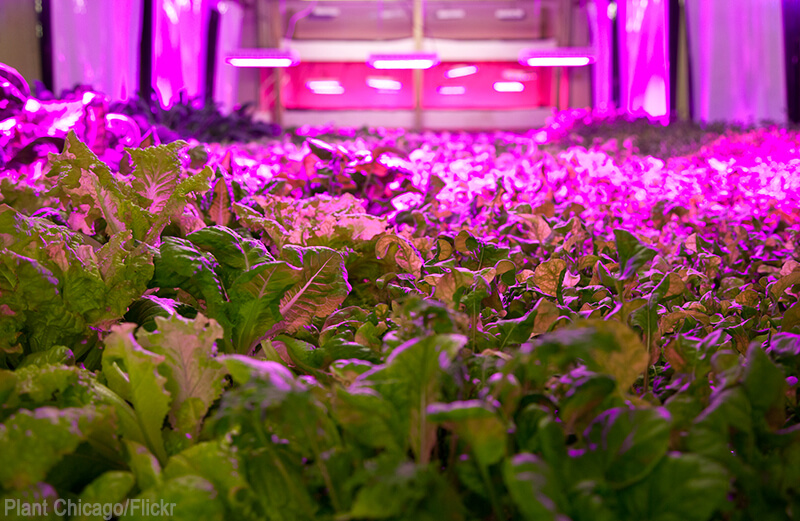
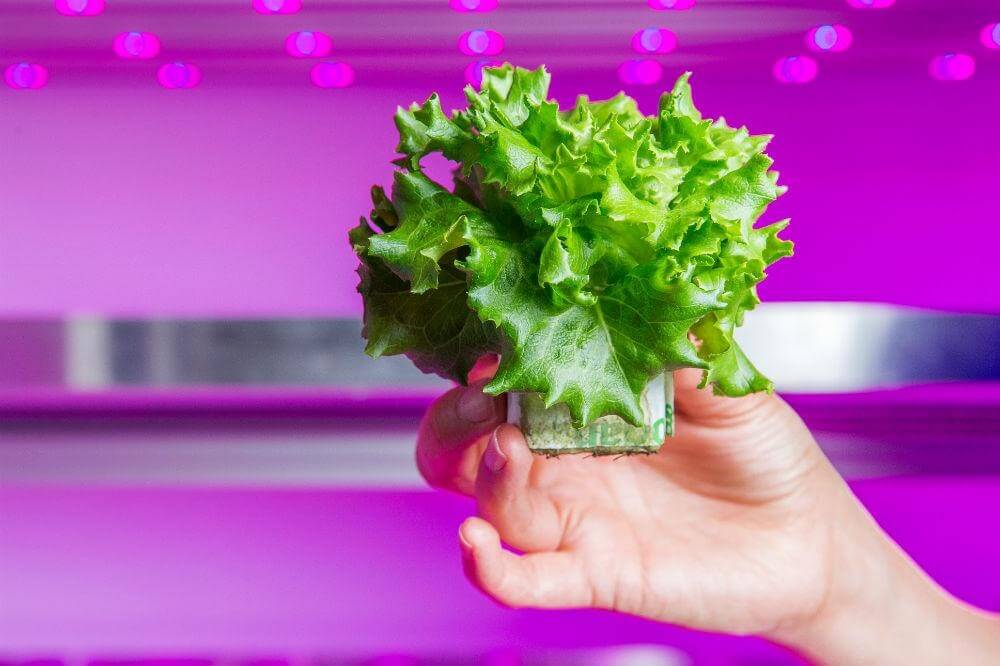
GrowWise City is a clean environment that allows for absolutely no air or natural light. At this 2500 square foot facility, scientists are working day and night in a bid to provide farmers with “LED light growth recipes” that will help them to grow healthy and fresh crops throughout the year without any need of soil and sunlight. The research centre comprises of eight climate rooms that have four-layered mechanized planting racks. Each layer of the planting rack uses Philips GreenPower LEDs that specifically specialize in crop-growth and can be adjusted to suit individual plants. Presently, the researchers are working on light recipes for herbs, strawberries and upgraded leafy vegetables and aim to move on to developing recipes for carbohydrate crops like wheat and potatoes.

hr-photo-philips-city-farm-research-center-9-640x427-c

Gus van der Feltz, Philips Global Director of City Farming, expressed, “Our aim is to develop the technology that makes it possible to grow tasty, healthy and sustainable food virtually anywhere. The research we are undertaking will enable local food production on a global scale, reducing waste, limiting food miles and using practically no land or water.”

[adinserter block=”7″]

Author: Technology Blog
New Ultrasound Technology that turns screens into malleable surfaces

tablet-touchscreen-2-600x315-c

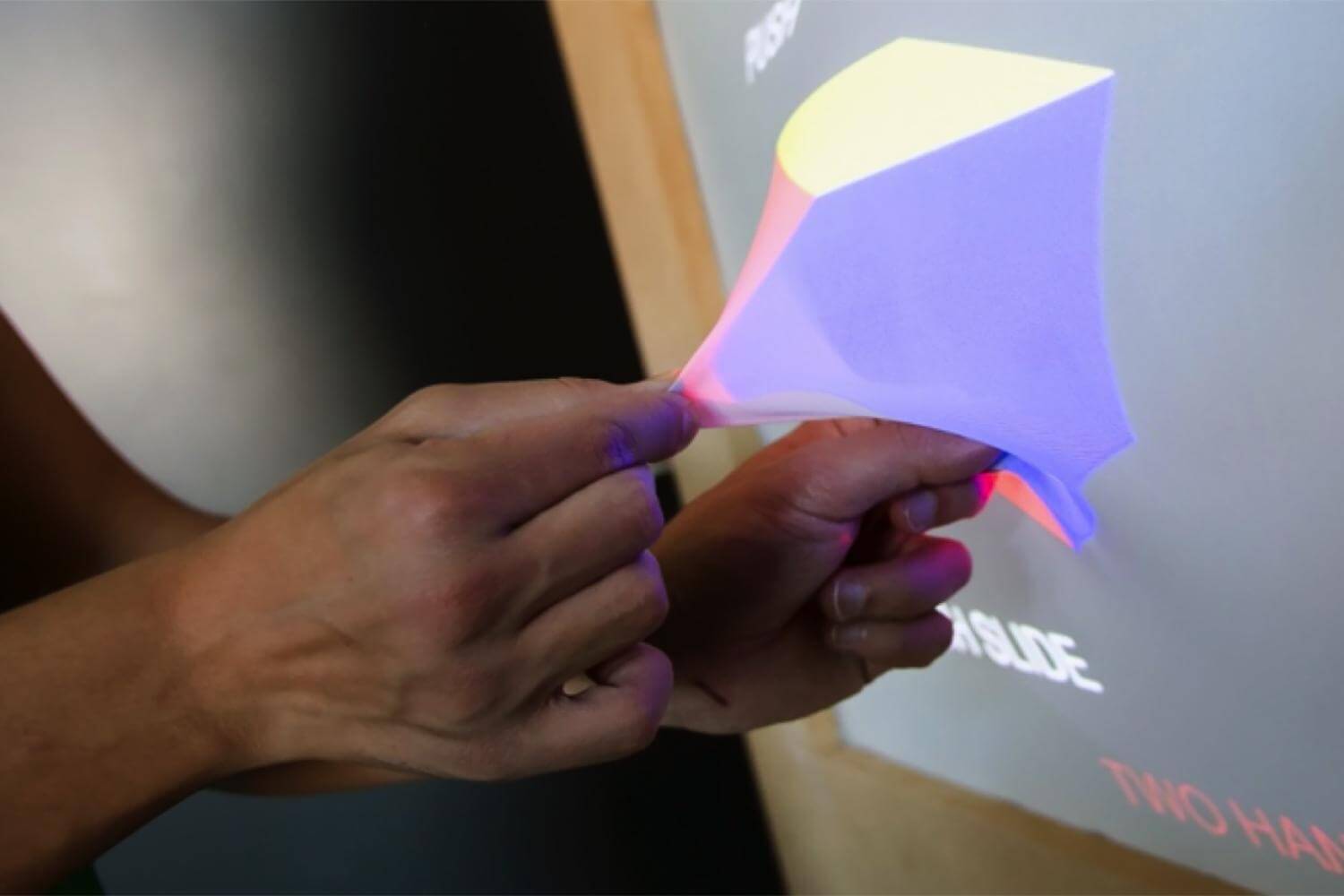
According to the GHOST (Generic, Highly-Organic Shape-Changing Interfaces) research project, static screens that we are surrounded with viz. TV, computer, laptop, smartphones and tablets are a real drawback for humans. We humans by nature are inquisitive and thrive on interaction and manipulation of the world around us! So working and believing in this same direction, this European backed research group has been working on developing displays with shapes and sizes that we can change.

According to Phys.org, in the past two years the group has developed various systems that aid in a real, physical interaction between the screen display and the user. By using ultrasound levitation, the group has succeeded in projecting the display out of the panel and when this is combined with a deformable screen, the users can actually reach into the display and interact with what’s there. During a demonstration of theirs, called Emerge, the GHOST project made a user reach into a bar graph and manipulate the levels.

touchscreen

The team has discussed various potentials of the technology, in reactionary display reforming for example; an ATM would be able to adjust its screen in way that it would prevent those standing nearby from reading a pin code as it is typed. In another example, using this technology, smartphones and tablet screens can be configured to conform to the shape of a map’s topography. Though such high levels of malleability of the screen is a far-fetched idea right now, the developers believe that within the next five years we would be able to see the first displays conforming to the shapes we choose.

[adinserter block=”7″]

Author: Technology Blog

Indigo – Clean : Killing bacteria with a switch

indigo-clean-1

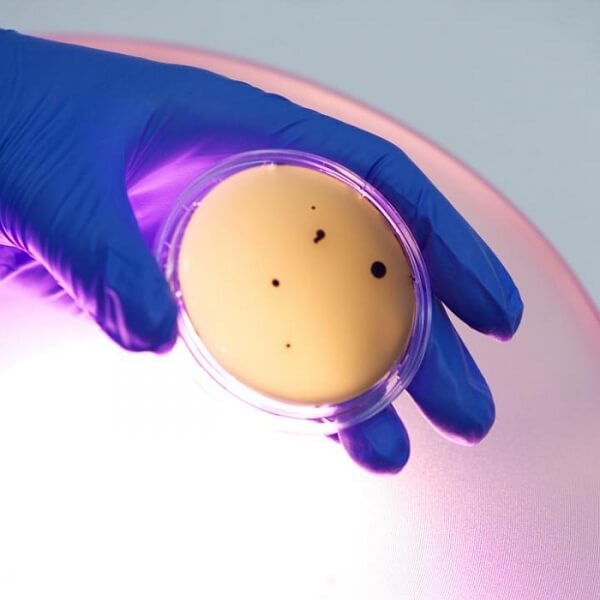
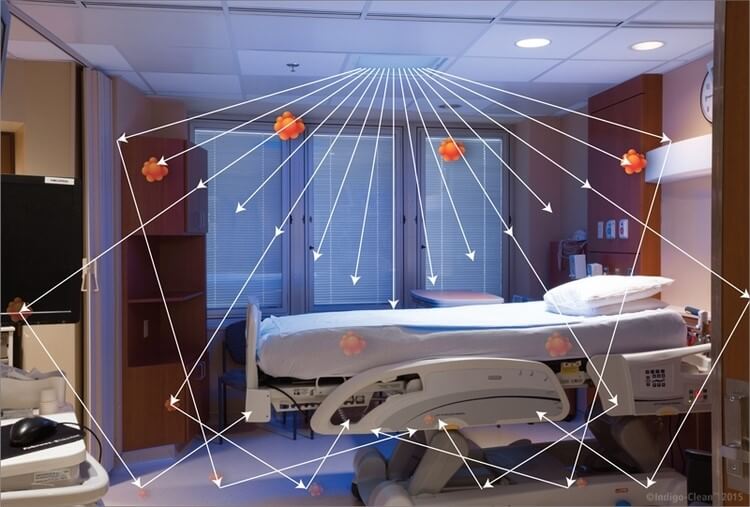
Originally developed by University of Stratchclyde Glasgow, and now presented and commercialized by Kenall Manufacturing, a new type of light fixture, ‘Indigo Clean’ claims to wipe out hazardous bacteria while still being safe for humans. All of us know about Ultraviolet lights’ sterilizing prowess but we also know that it is harmful to humans. Indigo Clean on the other hand, when switched on, emits light of high intensity low spectrum – HINS- at a wavelength of 405 nanometres which is actually outside the UV range and hence not harmful for humans.

shutterstock_131191718-970x546

The molecules inside the harmful micro-organisms lurking in the room, absorb the HINS light. This light once when absorbed by the molecules, causes a chemical chain reaction that stops their growth preventing reproduction and eventually kills them.  As Indigo- Clean is safe for humans, no special operator or clearing out of the room is required. Activate it with a switch on the wall and poof! There goes that harmful army of bacteria!

[adinserter block=”7″]

Author: Technology Blog

Red Light can heal by Inducing Increased ATP Production

dc744b0423b21d56d42b6642b1087397

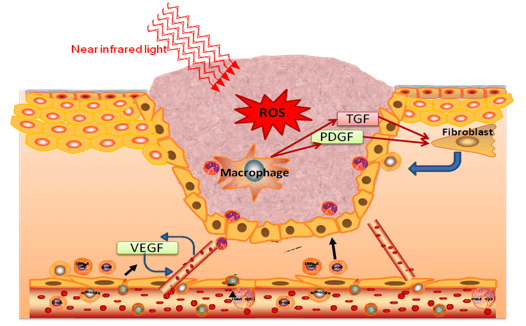
A burst of red light seems to be capable of healing wounded cells, providing analgesic effect and perhaps even helping with male infertility. This red light makes the water (main constituent of our cells), less viscous, which allows the enzyme present on mitochondria (powerhouse of cell) to spin faster, producing more ATP (energy unit).

LaserAction

Near infrared light has been proved to help with Parkinson’s disease in mice and can also energize sperms to increase fertility. Eye burns and tissues with pain and inflammation can be alleviated.

temp

[adinserter block=”7″]

Author: Technology Blog
New Jersey to come up with Largest Vertical Garden Ever Made!

Organics-Restaurant-Vertical-Garden-Urbanarbolismo-1

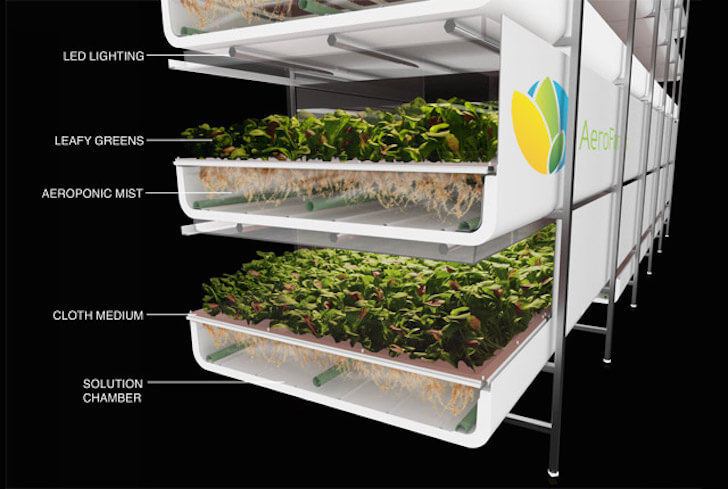
A steel factory in New Jersey has started to metamorphose into what could be the biggest indoor vertical garden till date. Spanning 69,000 square foot of space, this garden would be capable of feeding thousands and would produce up-to two million pounds of romaine lettuce, kale and arugula annually.

This main advantage of this new structure would be that it uses 95% less water than an average outdoor farm, plus no pesticides will be involved in production. AeroFarms, the company providing for this development, estimates this farm to be 75 times more productive than an outdoor farm. This farm, if successful, could be a great help in wake of the crippling drought in California.

verticalfarm_800

First phase to be completed by October 2015.

[adinserter block=”7″]

Author: Technology Blog
Verified by ExactMetrics