
Alien life is something that excites one and all irrespective of the age group they belong to. And when it comes to scientific evidence of this, scientists leave no stones unturned in searching for one. A star designated KIC 8462852located above the Milky Way, between the constellations Cygnus the swan and Lyra the harp, has pushed the astronomers into excitement mode.
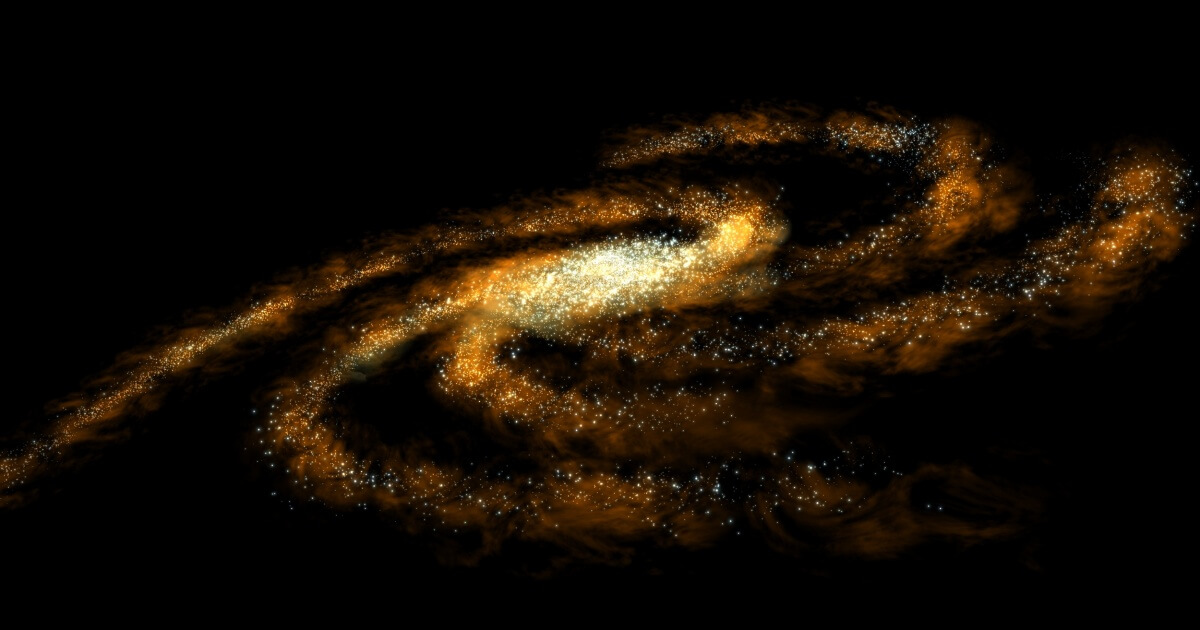
The star attracted their attention because of a large mass of matter found in tight formation around it. These kinds of formations are common for a young star but according to telescopic evidence, it is a mature star. It also must be a new formation, or the debris field would not be there. Either gravity would have clumped the debris together or it would have been absorbed by the star.
This star first caught the attention of astronomers in 2009, when the Kepler Space Telescope singled it out as possibly having orbiting planets. It landed on the radar again in 2011, when citizen astronomers volunteering at Planet Hunters flagged it as being “interesting” and “bizarre.” Yale post-doctorate student Tabetha Boyajian, who is in charge of the Planet Hunters team, recently published a paper about the phenomena, looking at all the possible natural explanations. The most reasonable explanation is that another star passed by KIC 8462852 star with enough comets in tow to produce the unusual pattern. Although, cosmically speaking, it would be highly unlikely that a star would do this at the exact same time we developed the capability to see it.
Other than that, the astronomers were bound to think the age old theory of alien life thriving on the star because of these unusual patterns. According to Penn State University’s Jason Wright, the structures “looked likeBoyajian also is exploring the alien angle and is working both with Wright and Andrew Siemion, the Director of the SETI Research Center at the University of California, Berkeley.

By January 2016, the team of three, plan to point a radio dish at the star to see if it emits radio waves indicative of technological activity. If significant radio wave activity is detected, the trio would use the Very Large Array (VLA) in New Mexico to confirm their findings. But till then we will have to keep our brains working about how do those aliens look and communicate, if they are really there.
[adinserter block=”7″]
Author: Technology Blog

