
Another bandage called liquid bandage, developed by a team from South Korea, Germany, and the US represented by Dr. Conor Evans from the Wellman Center for Photomedicine funded in part by the Department of Defense can also indicate wound healing but not on the basis of measuring pH. These liquid bandages are designed in such a way that they map oxygen concentration in skin (including burns). It is to be noted that blood supply rich with oxygen and glucose is essential for healing of wounds and a deficit can cause chronic sores due to poor recovery. The liquid bandage delivers this information about the oxygen levels simply by changing colour. Two oxygen-sensitive dyes; red porphyrin and a green dye, are incorporated into a nitrocellulose liquid. The liquid glows green where the tissue underneath is properly oxygenated, and shows red where there’s an oxygen deficit. A thin film on top of the bandage keeps atmospheric oxygen from confusing the readings, and the porphyrin from contacting the skin. The porphyrin is the last component awaiting FDA approval. It is the brightness of porphyrin that makes it possible to view the color changes with the naked eye. Though this liquid has been tested only on animals so far but the team is quite optimistic about moving further towards clinical trials.
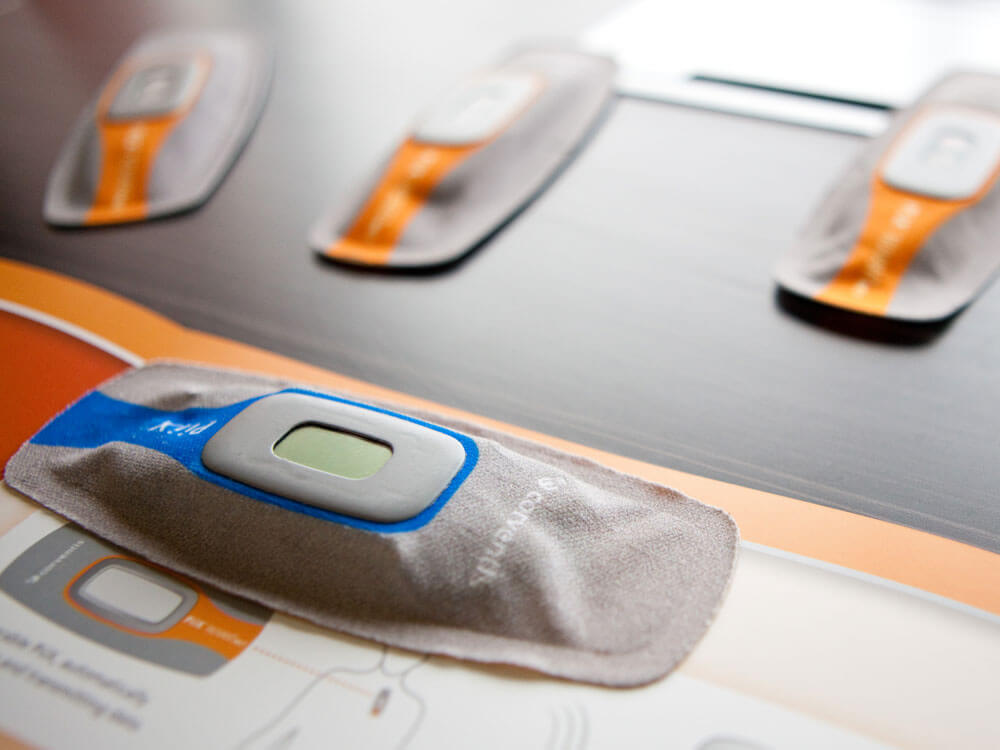
Anticipatory care giving bandages
Under another project being supported by the National Science Foundation, a team is working on developing bandages that can detect tissue damage even before it becomes visible. This bandage is basically a printed array of miniscule electrodes on a thin flexible film. Intended for pressure ulcers, otherwise known as bedsores, the bandage monitors the electrical changes caused by cell death. When internal cells which are underneath the surface of the skin, start to die, the cell walls break down and the bandage reads the electrical signals that escape the degraded walls. This bandage has already been tested on rats. For further study in this direction, using electrical fields to control the healing process is on the cards as theoretically, epithelial cells in particular are responsive to electrical fields hence manipulating such fields can possibly change the way wounds heal. Apart from this, efforts are on, to find a way to trigger galvanotaxis (the process of cells migrating to the injury) which might make it possible to adjust ‘how’ a wound heals thus minimizing scar tissues in turn.
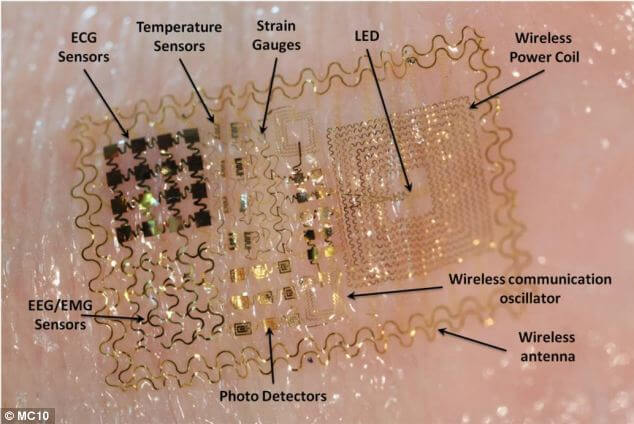
Though the above two NSF and the DoD project would conclude in 2016, expecting these high-tech bandages anytime before five years is not feasible. But whenever they are available on the shelves, they sure will make life better for many people.
[adinserter block=”7″]
Author: Technology Blog

