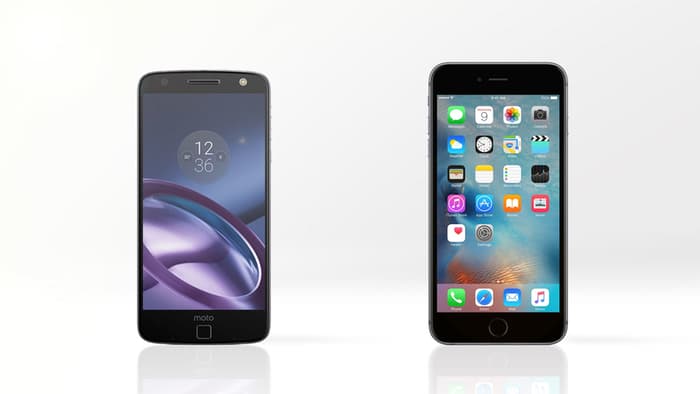
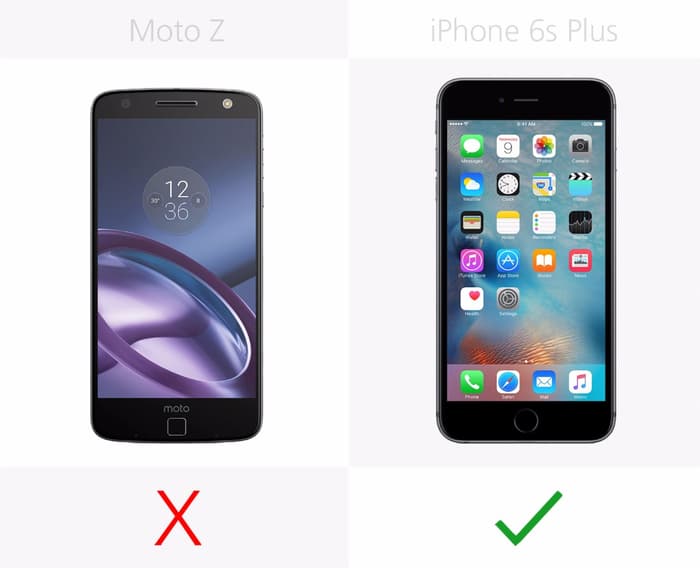
Apple has this going for it: it’s pressure sensitive display that no other manufacturer has been able to snag yet. Apple’s pressure-sensitive 3D Touch display tech, gives you a series of shortcuts by hard-pressing on the screen.
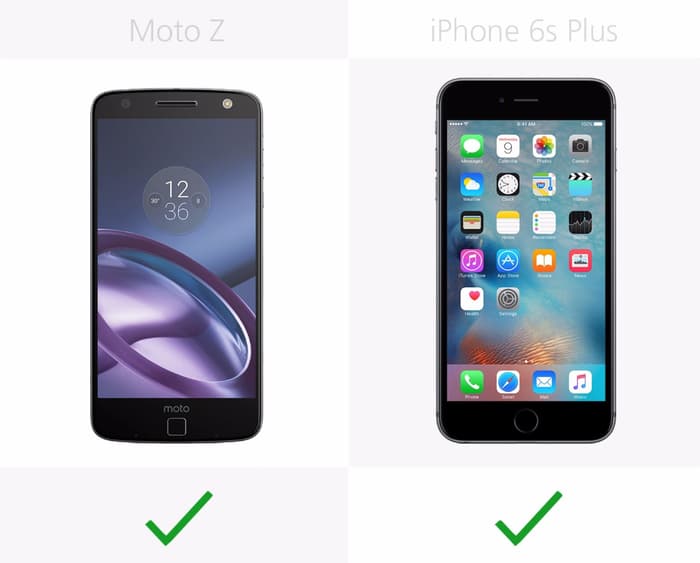
Like most modern high-end smartphones, the Moto Z has a fingerprint sensor, but it works a little differently than Apple’s. Instead of doubling as a home button, the Z’s also serves as a power/sleep button (its home button is onscreen/virtual).
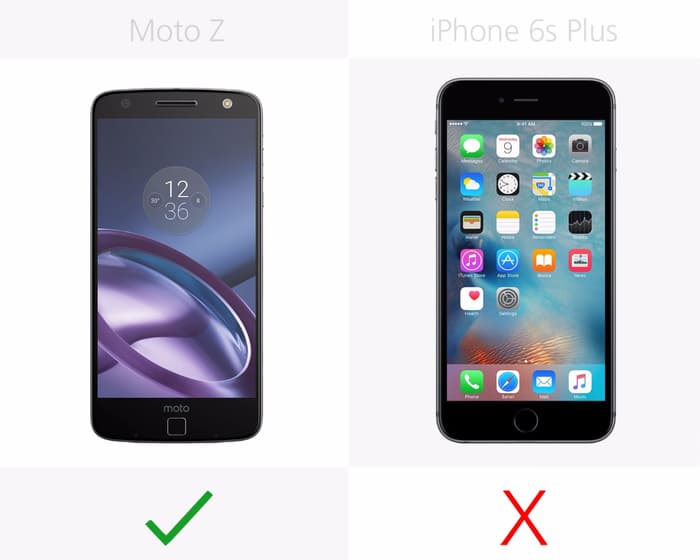
One of the quirkier Moto Z mods is the optional Moto InstaShare Projector. The bulky accessory lets you beam the phone’s screen onto a 70-inch wall projection. This could have its niche uses, but just remember that what the huge image or video gains in size, it loses in (semi-transparent) quality.
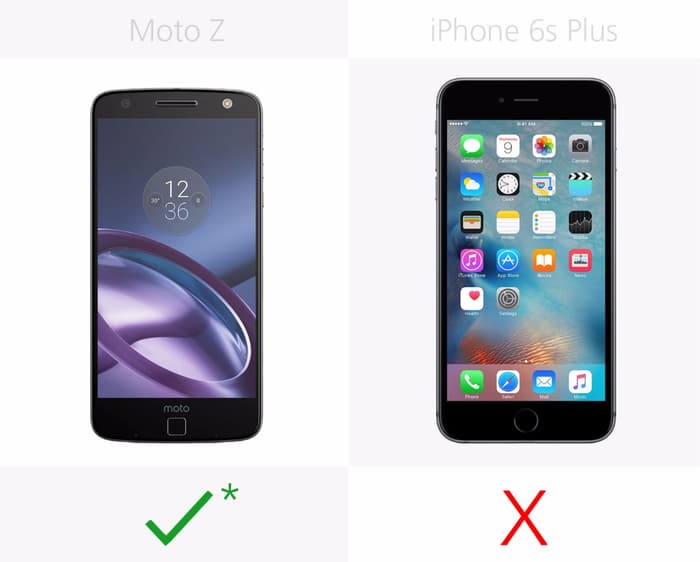
It will be interesting to see if Apple adds some sort of fast charging to its 2016 flagship. Quick-charging tech has been a huge advantage for Android phones since late 2014. Not to mention, there’s no built-in wireless charging on either phone, but one of the Moto Z’s battery packs adds it.
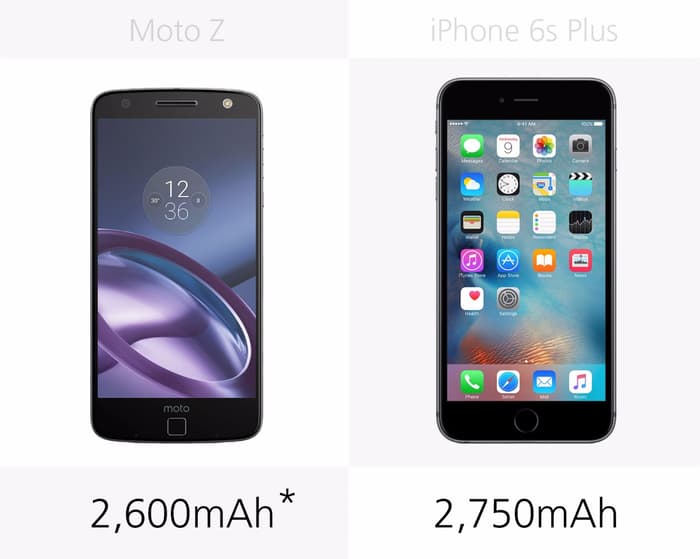
The Moto Z’s internal battery capacity comes out a little behind, but one of its most exciting mods is a battery pack that adds an extra 2,220 mAh – which, in total, would give it 75 percent more juice than the iPhone.
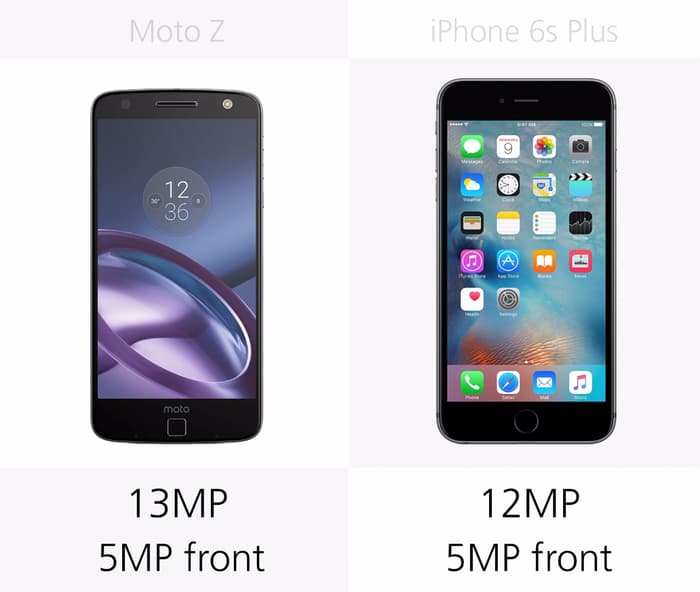
When it comes to the camera resolution, Moto Z sports 13 MP and 5 MP in the rear, and Apple’s iPhone 6s Plus has 12 MP and 5 MP (rear). Though, Moto’s rear shooter does have significantly wider aperture, which could bode well for its low-lit results. Both phones can help you shoot clearer shots, even with shaky hands, with built-in Optical Image Stabilization.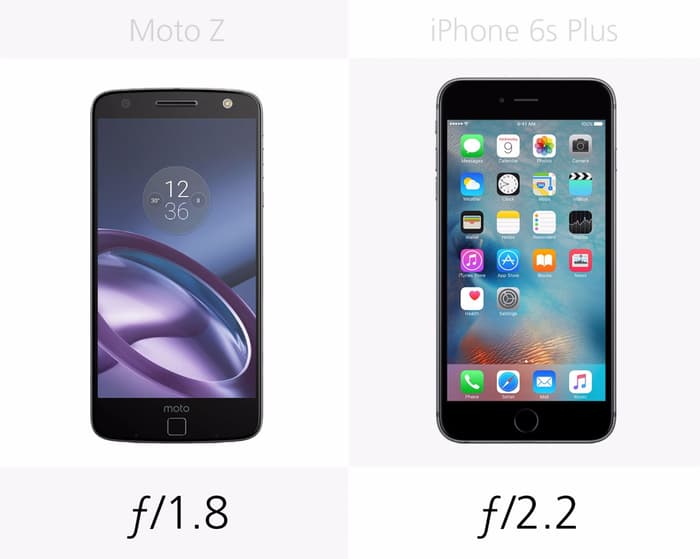
The handy old twist to launch shortcut for the Moto’s camera, first seen in the company’s 2013 flagship, is back in the Z with the Quick Launch option for Camera.
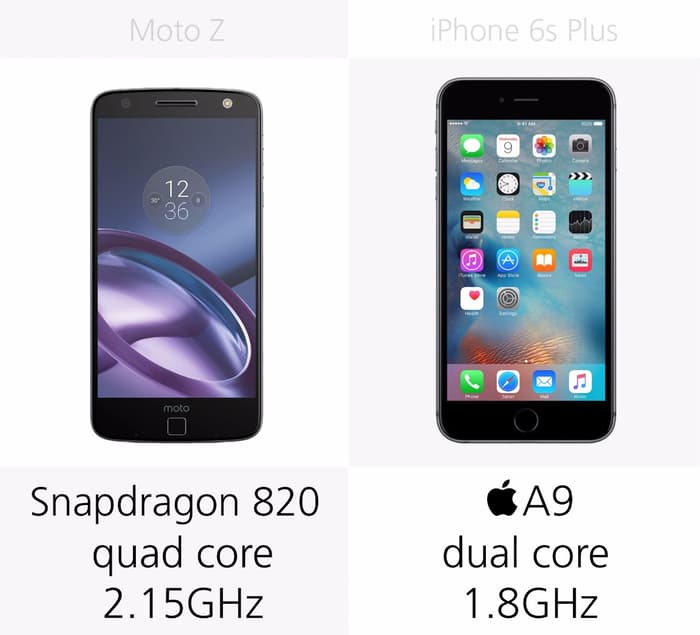
Expect crisp performance and plenty of power from both handsets. Moto Z has a Snapdragon 820 quad core 2.15GHz processor, while Apple has its characteristic A9 Dual Core 1.8GHz. The Moto Z runs a nearly stock version of Android Marshmallow, while the iPhone 6s Plus will stick with iOS 9 for the next few months (at which point it will jump to the just-announced iOS 10).
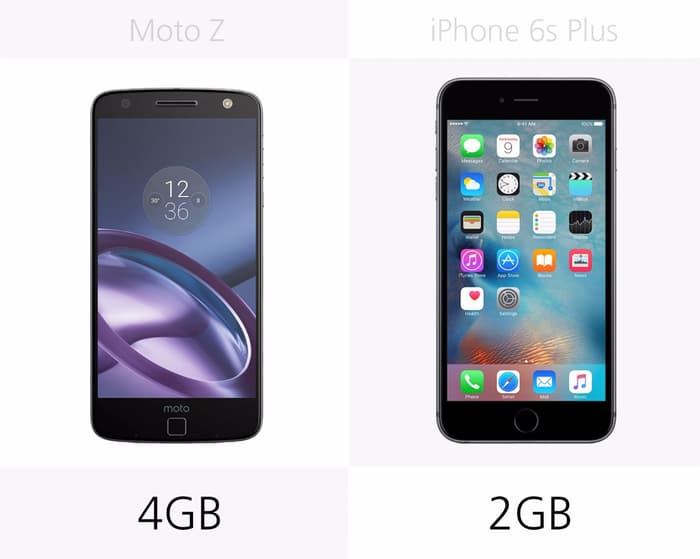
Although, the Moto doubles the iPhone’s 2GB RAM, but this is another area where the same company making both hardware and software allows Apple to outdo on-paper expectations.
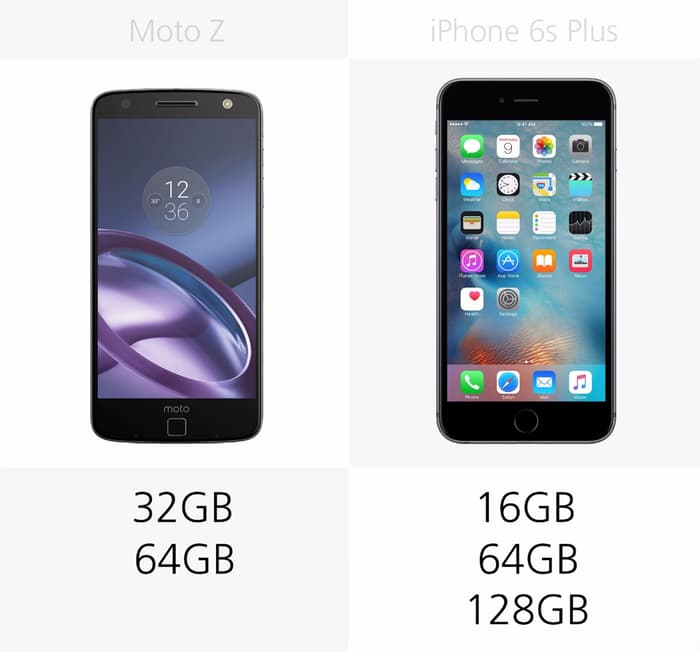
Apple’s still forcing 16GB internal storage on its base-price customers, while Moto Z offers double of that. That’s made worse by the fact that iPhones have no expandable storage support. The Moto Z lets you add up to an extra 2 TB.
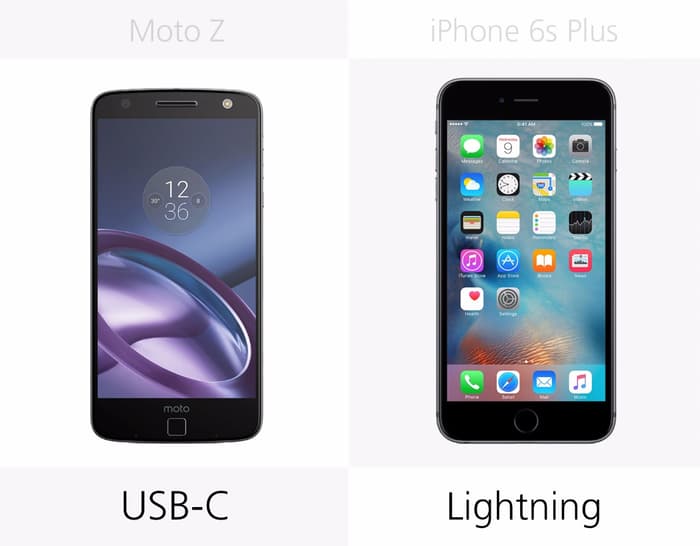
Apple had a big head start on reversible charging and transfer cables: it introduced its Lightning cable back in 2012, while Android OEMs just started switching to the reversible USB-C standard late last year. But at the same time, if you own a pair of wired cans and are thinking about buying the Moto Z, you’ll want to factor in the cost of switching to a pair of wireless or USB-C headphones (think Apple’s headphone jack-less plan).
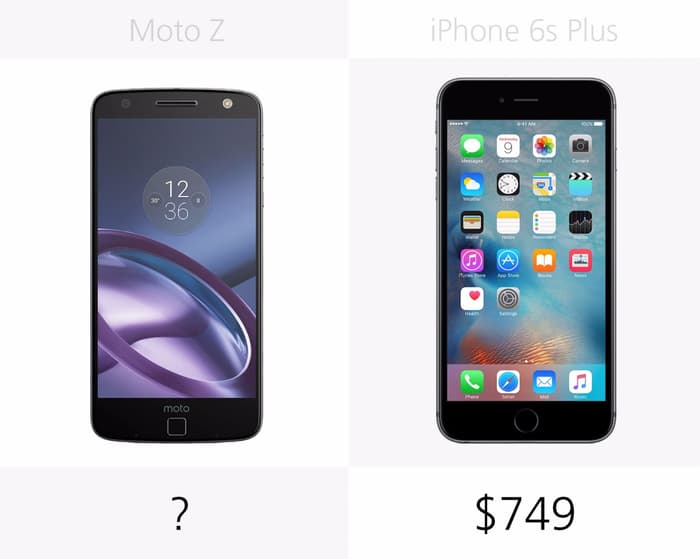
We still don’t know what the Moto Z will cost, but we think Lenovo/Motorola would be wise to keep the base phone’s price down as much as possible. After all, we have a lot of extra modules to stock up on!
[adinserter block=”7″]
As a technology lover you may like our daily important technology news series. It’s a playlist and you can retrieve the total day-wise videos. Please consider subscribing our YouTube channel:
Author: Technology and Beyond

