
Train stations doubling up as cool hangout places
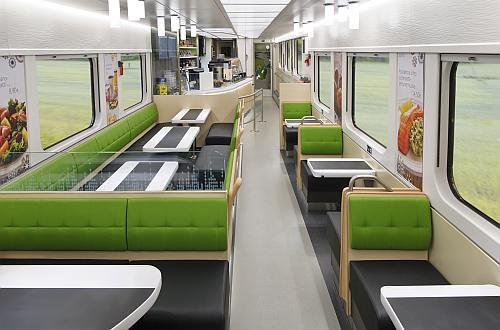
What if you descend from your train and want to head to a movie theatre as soon as you step down without wanting to go to your home or without needing to go to your favourite multiplex in the city? What if you had the luxury of ordering a cold coffee and a delicious meal on board the train? What if the train station you reach houses clubs, ice-skating facilities, discos and all? You wouldn’t need to go hopping on a taxi to find your favourite hangout place. Stations with cool hangout spots already exist in places like Tokyo and Dubai, the plan should be to take this idea to as many stations as we can. “Future train stations should be relatively pleasant, brighter, and have more customer amenities,” says Paul Skoutelas. He’s the National Director of Transit and Rail at WSP Parsons Brinckerhoff, the architecture firm whose portfolio includes One World Trade Center, London’s Shard, and High Speed 2, a high-speed rail line in the UK.
So the future of train stations would not have filthy dungeon like places reeking of pee and dungeon smell, instead they will be something like the $4.5 billion Transbay Center in San Francisco. It is being constructed in the heart of the city and it will be a commercial and residential hotspot to complement the modernist transport hub. Over 4,400 residential units will be built, 100,000 new square feet of retail space, 1,000 hotel rooms, bike lanes, 11 acres of parkland, including a 5.4-acre rooftop park atop the Center. It’ll all be punctuated with the 1,070-foot tall SalesForce Tower, the tallest tower in the city.
Apart from these things, safety should be the utmost concern for future train and train station designs.
Speed, more speed!!
The future trains need to be faster, faster than even the maglev. Yes faster than 375 mph. In future, time will become more important what with the huge influx of people thronging the urban areas to earn their livelihood. But we will need more Maglevs. Maglev—which stands for magnetic levitation—eliminates friction by replacing wheels with superconducting magnets that line the tracks and the rolling stock, allowing the train to “float” and get pulled along by magnetic forces at lightning speeds. High speed rails have already knocked on the doors of US. California has started construction on its high-speed train linking Los Angeles and San Francisco, while a private Texas venture is working with the same company that made Japan’s bullet train to plop a replica servicing Houston and Dallas. Just last month, a private Chinese consortium announced plans to build yet another high-speed rail from Las Vegas to the LA area.

But for all these things to happen what is needed is a lot of money and a lot of shift in the way people perceive rail travel as. Most of the people still think trains as the cheaper version of commuting with no amenities and advantages attached to it. But the good news is general attitude of the people has started shifting and they have started considering this mode of transit as an efficient one. But there is a long way to go. More socks will have to be pulled more money would have to be doled out to make the dream of the future of train transit a beautiful one!
[adinserter block=”7″]
Author: Technology Blog

