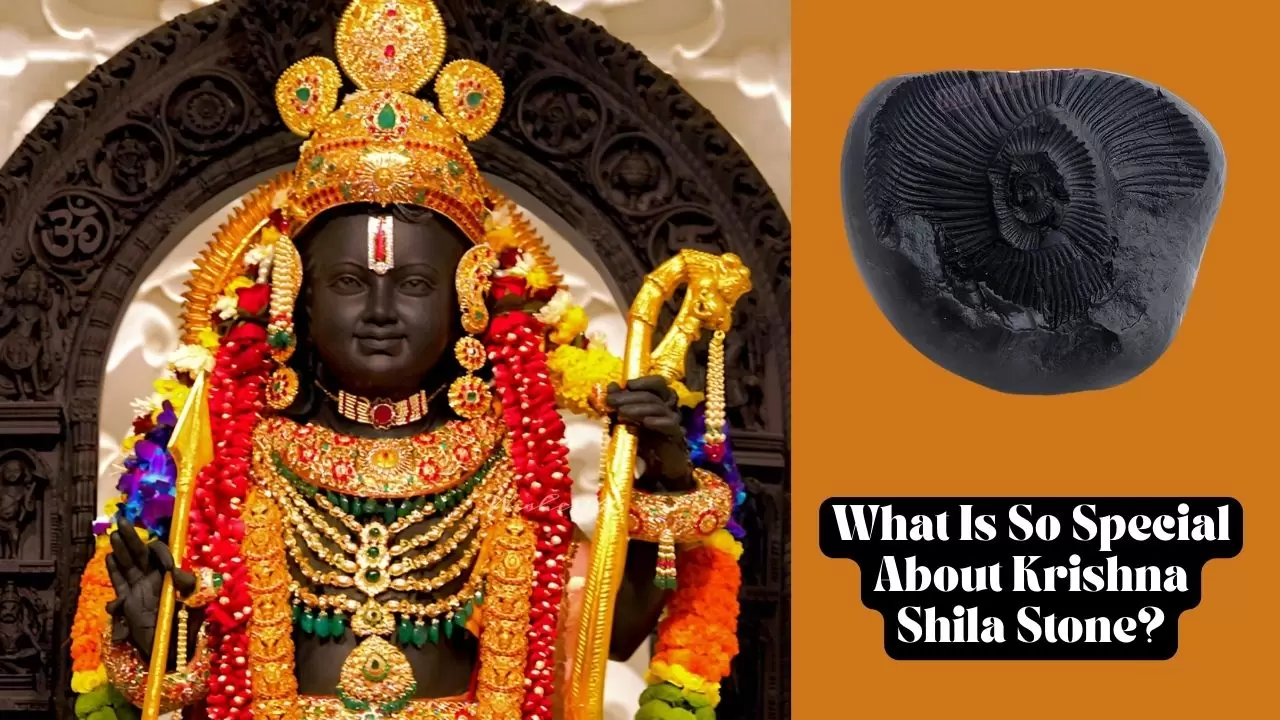
Carving Divinity: Why the ‘Krishna Shila’ Stone Was Chosen for the Ayodhya Ram Lalla Idol
Deep within the heart of Karnataka, nestled amidst lush green hills, lies a treasure trove of captivating beauty – the ‘Krishna Shila’ stone. For centuries, this unique black granodiorite has captivated artisans and sculptors, but its recent rise to fame stems from a singular honor: being chosen to craft the sacred idol of Ram Lalla for the Ayodhya Ram Mandir.
But what makes this stone so special? Why was it deemed worthy of embodying the divine essence of Lord Rama? Let’s delve into the captivating qualities of the Krishna Shila and understand its crucial role in shaping the Ayodhya icon.
1. A Canvas for Eternity:
The Krishna Shila is renowned for its exceptional durability. Unlike many other stones, it weathers the elements with remarkable resilience, resisting wear and tear for centuries. This makes it the perfect medium for an idol destined to stand as a timeless testament to faith. Imagine, millennia from now, the Ram Lalla idol, sculpted from this enduring stone, still radiating its divine splendor – a testament to the unwavering devotion of generations.
2. A Symphony of Light and Shadow:
The Krishna Shila possesses a captivating deep black hue, punctuated by subtle flecks of grey and white. This unique color palette creates a mesmerizing play of light and shadow, adding depth and dimension to the sculpted figures. Think of the intricate details of Lord Rama’s attire, delicately carved from the Krishna Shila – the play of light on the dark canvas will accentuate every fold and curve, bringing the divine form to life in a breathtaking display of artistry.
3. A Whisper of Divinity:
Beyond its physical attributes, the Krishna Shila holds a deep cultural and spiritual significance. Its name itself, meaning “Krishna’s Stone,” evokes a sense of divine connection. Legend has it that Lord Krishna himself used this stone to build his celestial abode, Dwarka. Choosing the Krishna Shila for the Ram Lalla idol, therefore, imbues the sculpture with a sense of sacred lineage, connecting it to the rich tapestry of Hindu mythology and tradition. Also just like Rama, Krishna is also one of the avatars of Lord Vishnu hence the stone.

4. A Tribute to Karnataka’s Artistic Legacy:
The selection of the Krishna Shila also recognizes the exceptional skill and dedication of Karnataka’s sculptors. For generations, artisans from this region have honed their craft on this very stone, breathing life into intricate carvings and awe-inspiring temple sculptures. Using the Krishna Shila for the Ram Lalla idol not only signifies its suitability but also celebrates the artistic heritage of Karnataka, showcasing its contribution to the grand vision of the Ayodhya Ram Mandir.
5. A Symbol of Unity and Harmony:
The journey of the Krishna Shila from Karnataka to Ayodhya transcends geographic boundaries. It serves as a powerful symbol of unity and harmony, bridging the cultural and spiritual landscapes of India. The presence of this stone in the heart of the Ayodhya Ram Mandir signifies the collective faith and devotion that binds diverse communities together.
The Ram Lalla idol, carved from the mystical Krishna Shila, is more than just a sculpture; it’s a confluence of artistry, resilience, and divine spirit. It’s a testament to the enduring power of faith and a symbol of unity that transcends geographical borders. In choosing this captivating stone, the Ayodhya Ram Mandir project has not only entrusted the divine form of Lord Rama to a worthy material but also woven a thread of Karnataka’s artistic heritage into the fabric of this national monument.
So, the next time you gaze upon the magnificent Ram Lalla idol, remember the captivating journey of the Krishna Shila – a journey that transcends time and space, carrying within it whispers of divinity and the echoes of generations of skilled artisans.

