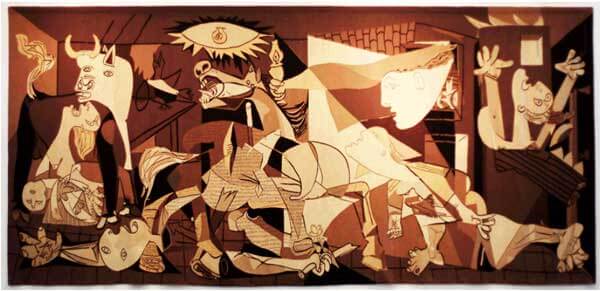
Guernica by Pablo Picasso
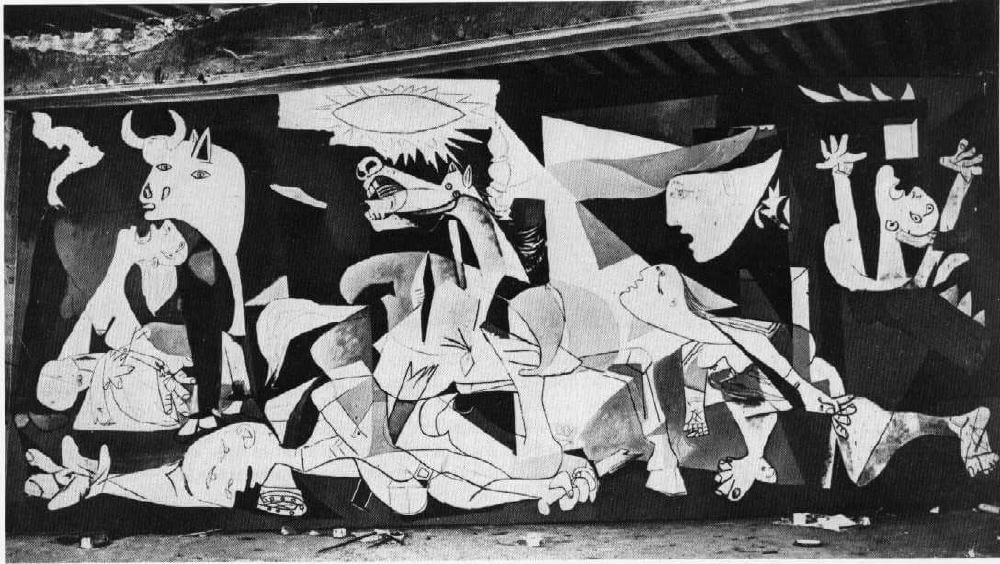
Picasso is the greatest painter ever lived in modern time with his wide ranging influence in every aspect of visual art that will continue to dominate long afterwards. His greatest contribution to the modern art is his exploration of a new form of painting and art called cubism, which signifies representing an object in a greater context with several viewpoints rather than being limited to one. Picasso’s greatest and most ambitious painting Guernica displays this new form to its widest exposure to the advantage of exploring philosophical and political motifs. The cubic objects and expressions in Guernica further influenced an array of architectures around the world. Architect Le Corbusier built the chapel named Notre Dame du Haut in Roadchamp taking inspiration from various cubic elements in Guernica. Scientifically speaking, this new cubic architecture in Eastern France is less decadence prone and more useful while offering the look and feel of diverse aspects put together.
A Sunday Afternoon by Georges Seurat
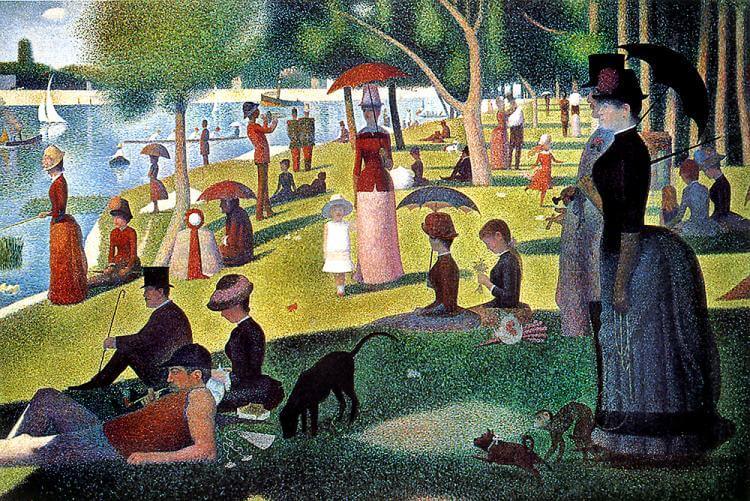
Among the great impressionist painters Georges Seurat is considered as a class apart for his typical pointillist technique of creating a dot covered smoothness of colour that evokes a mellow and dreamy countenance for the viewer. Georges Seurat was the admirer and follower of the famous colour theory that said that going beyond the primary colour would make a different colour for the viewer when seeing the painting from a certain distance. This theory not only led him to pointillist paintings he is so famous for but would make him incorporate colour in a completely different way. His visionary and scientific approach to the use of colour is a rare element that few artists could ever come close to achieving.
Our Recommendations
[post_connector_show_children slug=”our-recommendations” link=”true” excerpt=”false”]
The Starry Night by Vincent Van Gogh
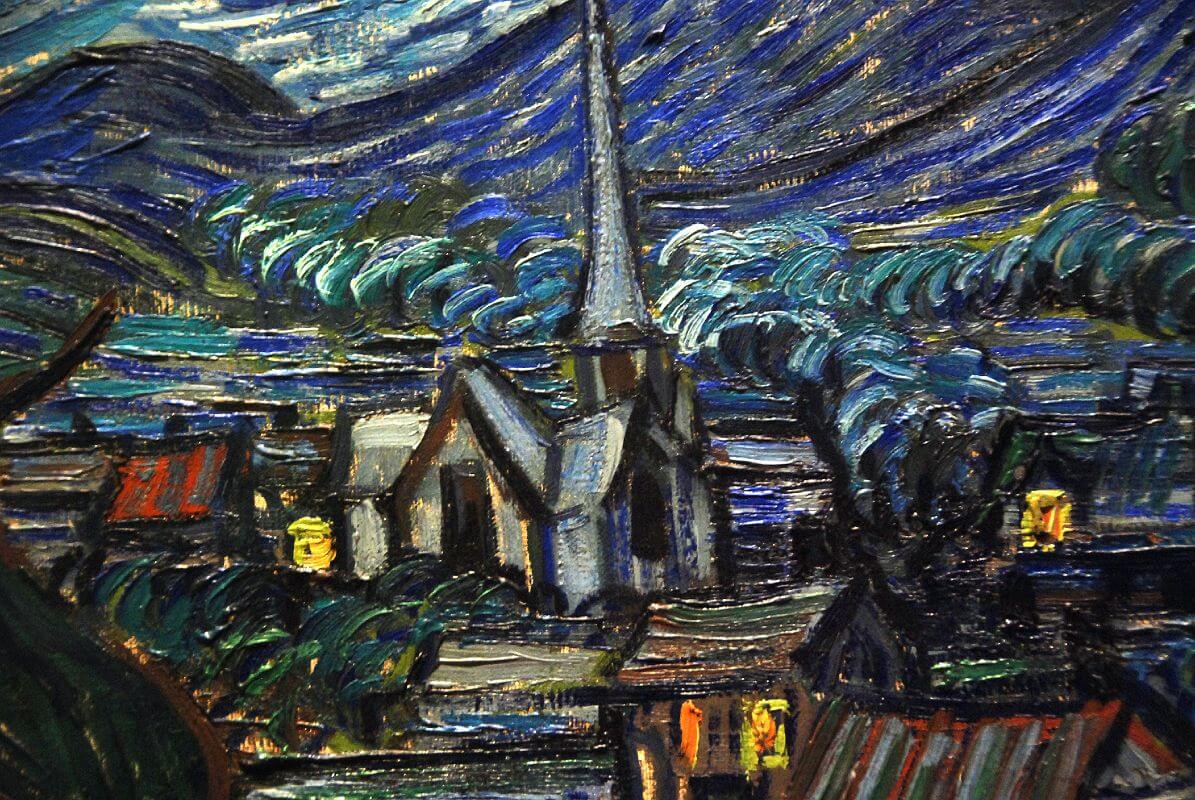
Greatest impressionist painter Van Gogh had always been known to the world as one of the art’s most sensitive minds who created an array of the most striking visuals that describe reality with his own psychological leaning on colour and form. But, until a decade ago we did not have any idea that in some of his great visuals he incorporated some remarkable scientific insights. The turbulent fluid wave often seen in tidal waves over sea water can be accurately recognized in the wave like colours in some of his paintings. His famous painting Starry Night is a perfect example of this. In 1889 when he worked on this painting no one had any exposure to such scientific phenomena and naturally this can alone be credited to his visionary ability which he incorporated in his great artworks. Painters and artists are often seers by nature and the above mentioned works of art only exemplify this to the highest degree.
[adinserter block=”7″]
Author: Technology Blog

