International Space Station (ISS) is a matter of pride for us- human beings as it is the important link between the space and the Earth. But doesn’t it occur to you that while we struggle with our internet signals once we reach a remote or distant location, how do people on International Space Station have access to it and that too without any glitch? Isn’t the space station a remote and distant location? If you delve deep, you will find that the ISS’s internet access is quite interesting.
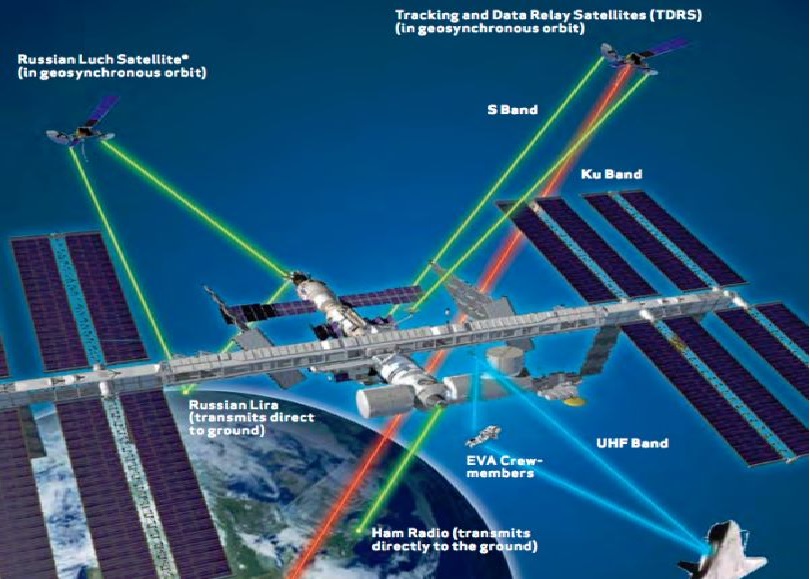
The basic problems in setting up internet in space are the inability to run a fibre-optic cable from ground to space and a planetary scale Wi Fi is still no less than a dream. This is the reason why the majority of communication with the ISS happens with the help of radio waves.
Radio is quite easy to set up (needing just an antenna and a transmitter) and an easy and straightforward way of broadcasting information. In addition to this, the atmosphere doesn’t block radio waves so the signals don’t get absorbed mid-way. Radio waves are the way we communicate with most of our satellites. The radio frequencies used for the space station communication are different from what we use in our cars. A GPS satellite for instance uses the ‘L band’ frequency range of 1 GHz to 2 GHz.
The radio connection to the ISS isn’t L-band, it’s Ku band (12-18 GHz) and S band (2-4 GHz), but the principle is the same. We can beam a signal up to the ISS, which has an antenna which lets them receive it, and then their computers can download an email.
[adinserter block=”7″]

